
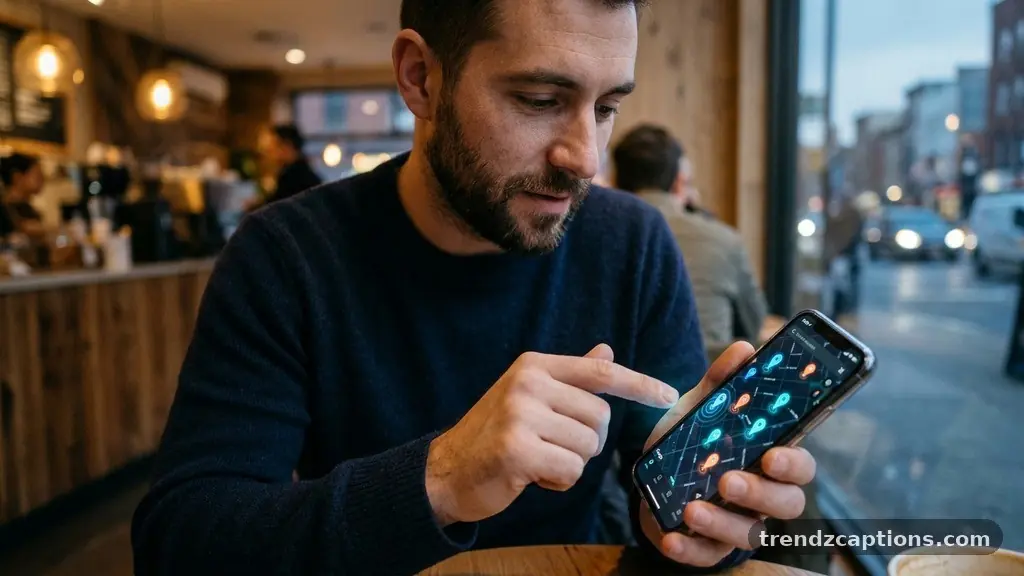
Sniffies meaning is easiest to understand when you see it as a location-based dating app for adults, particularly gay, bisexual, queer, and other men seeking nearby connections. Instead of relying mainly on a swipe queue, Sniffies places users and public profiles on an interactive map, making location and timing central to the experience.
The map-based design can feel different from a traditional dating service, especially because users may be looking for conversation, dates, community, or casual encounters. Knowing how geolocation, map pins, messaging, privacy settings, and personal safety fit together helps people decide whether the platform suits them.
What Sniffies Means in Practice
Sniffies is an adult social and hookup app built around discovering nearby users through an interactive map. The service is associated primarily with men who want to connect with other men, although the exact audience and availability of features can change over time.
Its defining idea is simple: rather than showing only a ranked list of profiles, Sniffies displays location-based information through map pins and profile markers. A person can browse what appears to be active in a selected area, open available public profiles, and decide whether to start a conversation.
The word “Sniffies” does not describe a technical dating category such as matchmaking or relationship coaching. It is the name of the platform, while “Sniffies meaning” usually refers to what the service is, who uses it, and how its map-based system works.
Unlike apps designed mainly for long-term relationship matching, Sniffies is commonly used for more immediate social or sexual connections. Some visitors may be interested in meeting quickly, while others use the platform to chat, find local events, or see what is happening in a particular neighbourhood.
The service is intended for adults. That matters because profiles, conversations, and location signals may involve sexual or suggestive content that would not be appropriate for minors.
Why the map matters
On a conventional dating app, distance may appear as a number below a profile. On Sniffies, proximity is much more visible because the map is the main discovery tool. A user can understand the general distribution of nearby activity without first scrolling through dozens of cards.
That design can be useful for people travelling, attending a large event, or moving through an unfamiliar city. It also creates a different privacy consideration: even when an exact address is hidden, a map-based service can reveal patterns about where people live, work, socialise, or spend time.
Features and interface details may be updated, so users should treat descriptions of buttons, filters, or map behaviour as general guidance rather than a permanent specification. The core concept remains the same: local discovery supported by geolocation and public-facing profile activity.
How the Sniffies Map and Profiles Work
Sniffies uses geolocation to help organise nearby activity. Depending on a user’s device settings, browser permissions, and the platform’s current design, location data may help determine which map area and nearby profiles appear.
The map itself is not the same as a live surveillance screen. A pin or marker represents information made available through the service, and its accuracy, timing, and visibility can vary. Users should never assume that a marker proves someone is currently standing at that exact spot.
Public profiles can include photographs, display names, preferences, short descriptions, and other details chosen by the account holder. The amount of information visible depends on the user’s choices and the platform’s current privacy controls.
| Feature | What it generally does | What users should remember |
|---|---|---|
| Interactive map | Shows local activity and available profile markers | A marker may not identify an exact real-time position |
| Map pins | Help users notice profiles or activity in a selected area | Do not assume every pin represents a verified person |
| Public profiles | Display information an account holder chooses to share | Photos and descriptions may be incomplete or misleading |
| Messaging | Lets users move from browsing to private conversation | Keep identifying information private until trust is established |
| Chat rooms | Support broader conversations among multiple users | Anything posted in a group setting may be seen by more people |
Some people browse without immediately contacting anyone. This is often called anonymous browsing, although “anonymous” should not be interpreted as a guarantee that activity can never be associated with a device, account, or network.
Messaging usually becomes the bridge between a map discovery and a possible meeting. A thoughtful first message can mention a shared interest or clarify intentions, while a vague request for private information is a good reason to slow down.
Chat rooms serve a different purpose from one-to-one messaging. They can make the service feel more social and help users learn about local activity, but group conversations also carry a greater risk of screenshots, unwanted attention, or accidental disclosure.
Who Uses Sniffies and What They Seek
Sniffies is strongly associated with the LGBTQ+ community, especially gay men and other men interested in meeting men. That audience does not represent one single goal, however, and assuming every user wants the same kind of encounter leads to misunderstandings.
One person may want a casual hookup, another may prefer conversation first, and someone else may be exploring local LGBTQ+ social life after relocating. Clear communication is more useful than relying on an app label to predict a stranger’s intentions.
The platform’s location-first design tends to appeal to people who value immediacy. A user visiting a new city may want to see nearby possibilities rather than build a long list of matches over several weeks.
It can also appeal to users who find card-based swiping repetitive. Seeing a map creates a stronger sense of place, although it also means that location awareness becomes part of the social experience.
Common reasons people open the app
- To meet men nearby for a casual encounter or possible date.
- To start a conversation with someone who shares a stated interest or preference.
- To learn about local LGBTQ+ activity while travelling.
- To browse public profiles without committing to an immediate meeting.
- To participate in chat rooms or discover a wider local community.
- To find connections that may not appear through conventional matchmaking filters.
These uses can overlap. A person might begin with anonymous browsing, exchange messages later, and only then decide whether an in-person meeting feels appropriate.
Expectations should be stated early and without pressure. Asking whether someone wants conversation, a date, or a sexual encounter is clearer than using hints that could be interpreted several ways.
Consent remains essential at every step. Agreement to chat does not mean agreement to share intimate images, reveal a home address, or meet in private, and agreement to meet does not remove the need for ongoing consent.
Privacy, Safety, and Sexual Health
Location-based services require more care than an ordinary profile directory because small details can combine into a recognisable pattern. A workplace, gym, favourite bar, regular travel route, and face photograph may identify someone even if the app does not publish a street address.
Privacy settings should be checked before browsing or messaging. Users should review what appears publicly, whether their location is shown broadly or narrowly, and whether profile visibility can be limited when they are not actively using the service.
It is also sensible to separate app activity from highly identifying personal information. Avoid sharing a full legal name, home address, employer, financial details, or documents with a person whose identity has not been independently established.
Practical precautions
- Use a profile photo that does not reveal a home address, workplace badge, or identifiable daily routine.
- Keep early conversations inside the platform until the other person seems consistent and trustworthy.
- Ask for a recent video call or another reasonable form of identity confirmation before meeting.
- Choose a public meeting point and tell a trusted friend where you are going.
- Arrange your own transport so you can leave without depending on the other person.
- Block and report accounts that threaten, pressure, impersonate, or repeatedly ignore boundaries.
People considering sexual contact should discuss safer-sex practices before meeting, not during a rushed moment. Depending on the situation, that may include condoms, testing, vaccination, HIV prevention options, and agreement about what activities are or are not acceptable.
For reliable information about testing, prevention, and treatment, the Centers for Disease Control and Prevention’s sexual health information is a better source than an anonymous profile or chat message.
Scams deserve attention too. Requests for money, gift cards, cryptocurrency, emergency payments, or expensive travel arrangements are warning signs, particularly when the person refuses a normal conversation or creates urgent pressure.
Catfishing can be harder to spot on a platform where users may value privacy. A polished photograph is not proof of identity, and a detailed profile can still be fabricated, so trust should develop through consistent behaviour rather than appearance alone.
How to Use Sniffies Responsibly
A good experience begins with realistic expectations. Sniffies can help people discover nearby connections, but a map pin is not a promise of compatibility, availability, honesty, or safety.
Write a profile that communicates the basics without exposing more than necessary. Stating general interests, preferred pace, and boundaries gives others useful information while reducing the temptation to disclose private details too soon.
Messages work best when they are specific and respectful. A short comment about a shared interest is more constructive than sending repeated demands for photographs or assuming that a public profile represents automatic consent.
Reading signals carefully
Pay attention to consistency. If a person’s story changes, refuses every reasonable identity check, avoids answering basic questions, or pushes you to meet immediately, treat that pattern as meaningful rather than explaining it away.
Respect a pause or a refusal without arguing. Blocking is not an overreaction when someone becomes abusive, and reporting harmful behaviour can help protect other users as well.
Digital boundaries matter after a meeting too. Do not share another person’s photographs, messages, location, or sexual information without permission, even if the interaction ended badly.
Users should also understand the difference between a private conversation and true confidentiality. Screenshots, notifications, browser history, and shared devices can expose sensitive activity, so account security and device privacy deserve attention.
Use a strong, unique password and enable available account protections. Avoid logging in on shared or public devices, and sign out when necessary, especially if the device can be accessed by roommates, family members, or colleagues.
If the app’s current controls are unclear, review its in-service help pages and privacy notices before changing location or profile settings. Platform features can change, and a setting that existed last year may not work the same way now.
Frequently Asked Questions
Is Sniffies a dating app?
Sniffies can be described as a location-based dating and hookup app, but it is not limited to traditional dating. Its users may seek casual sex, conversation, local social connections, or possible relationships, depending on their individual intentions.
Does Sniffies show someone’s exact location?
A map marker should not be treated as proof of an exact live location. Display precision, timing, privacy settings, and user-controlled information can vary, and users should avoid assuming that any pin identifies a person’s precise position.
Can someone browse without messaging?
Yes, browsing public profiles and map activity can be part of the experience without starting a conversation. However, anonymous browsing is not the same as guaranteed invisibility, so users should still review account, device, and location privacy.
Is Sniffies only for gay men?
The service is widely associated with gay men and other men seeking men, but its user base can include a broader range of LGBTQ+ people. Profiles and local activity differ by area, so the most accurate answer depends on the community using it in a particular place.
What should someone do before meeting a stranger?
Keep early communication respectful and inside the app, confirm basic identity where practical, meet in a public place, tell a trusted person your plans, and arrange independent transportation. Discuss boundaries and sexual health before any private encounter.
Final Takeaway
Sniffies meaning comes down to a map-centred way of finding adult connections nearby, with public profiles, geolocation, messaging, and chat rooms shaping the experience. It can be useful for local discovery, but the same features that make it immediate also make privacy, consent, and verification especially important.
Start by reviewing your privacy settings, share less personal information than you think you need, and let trust develop gradually. Used with clear communication and sensible safety habits, Sniffies can be a practical social space rather than a source of avoidable risk.